

Gatekeepers
Our team investigated the SiC MOSFET, and its strenuous water usage along with ways that are reducing it, and what industries can do better. Being the most basic unit of electronics, the transistor making that one critical part better will help lead to a more sustainable future.
Meet the Team
Our RAMP Project
Learn about the technology our team explored and the engineering challenge that shaped our work.
What We Investigated
Our team investigated Wolfspeed’s SiC MOSFET, a transistor that is frequently used in electric vechicals, solar panels, power grids, and chargers. It innovates previous silicon-based tech with higher heat resistance, at the cost of water usage. A big step in electronics and their upgrades.
What Made It Complicated?
Finding reliable sources for chip information, whether it was parsing the Wolfram website for information or finding if other websites are reliable or not. Also, AI muddied the water with untrustworthy results when they used proprietary data, and having to choose if I blindly trust it, or deny it, with the former used more often.
Our Work
Engineering Lifecycle Infographic
Our team investigated part of our product's engineering lifecycle and communicated what we learned through a visual infographic.
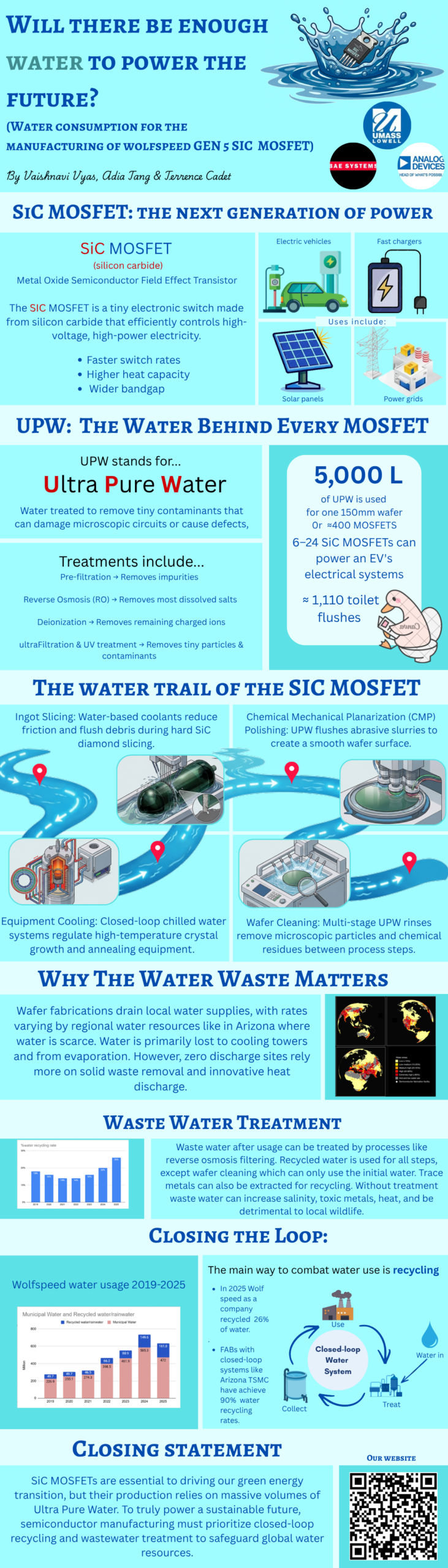
Will there be enough water to power the future?
Semiconductor manufacturing requires an immense amount of water to produce, but silicon carbide is to an even bigger extent. We strived to analyze the water usage of the manufacturing process of the SiC MOSFET, the transistor, the specifics, and how we can improve upon water usage, and processing. One apparent example is each wafer takes about the same water as ~1100 toilet flushes, putting into scale the impact of the water industry.
Meet the Engineers
Team Members
Each student brought a different engineering perspective to the team's work during RAMP.
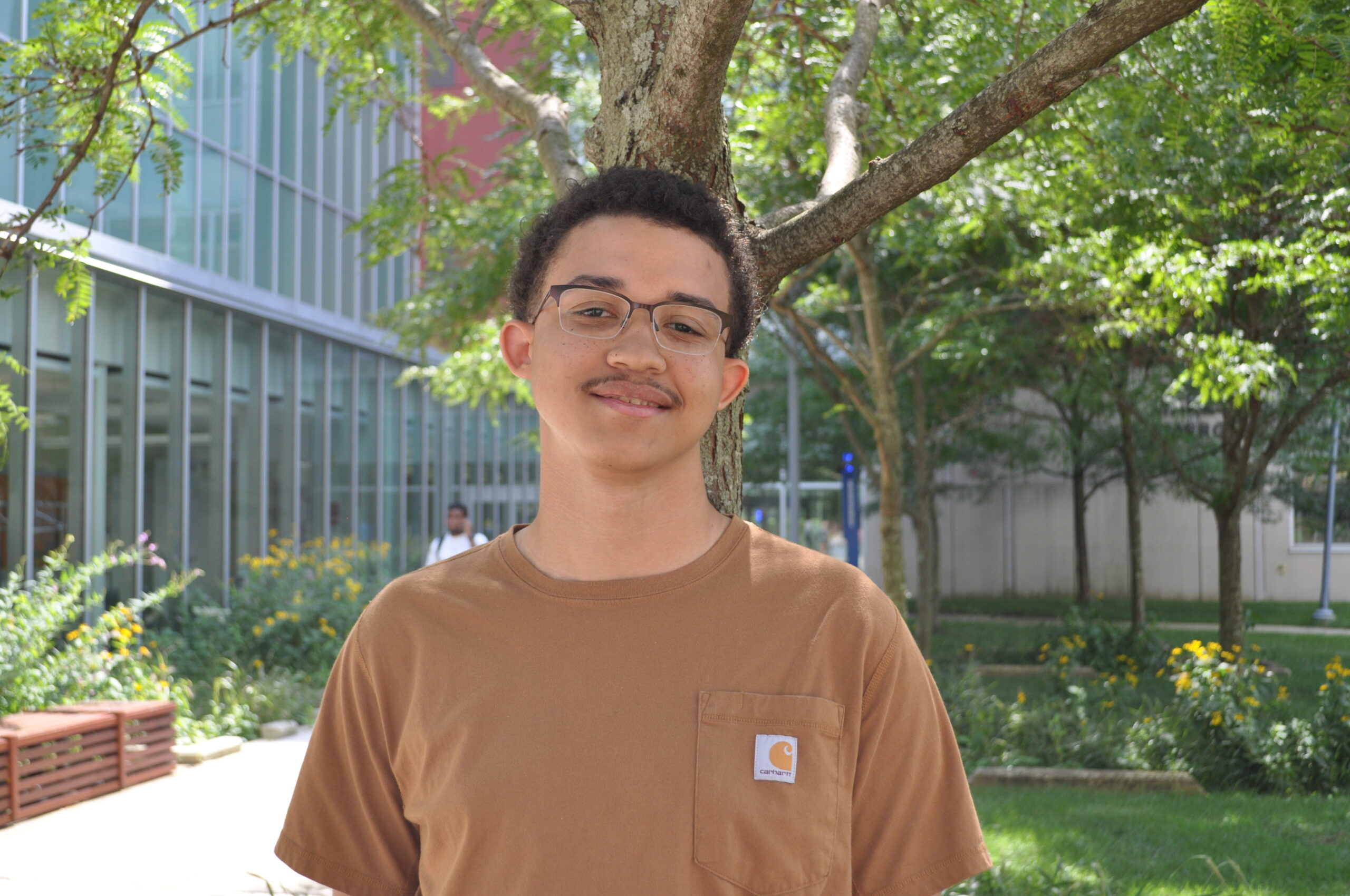
Terrence Cadet
I’m a rising freshman from Woburn, MA for Mechanical Engineering. I like to read, go for nature walks, and go to my local boxing gym. During RAMP I helped my team with research, get sources and reliable information to show on the poster. My favorite part of RAMP was the meet and greet with industry mentors, that helped reaffirm my love for engineering with the various fields and companies that could work and learn how that I have time to find my place in engineering.
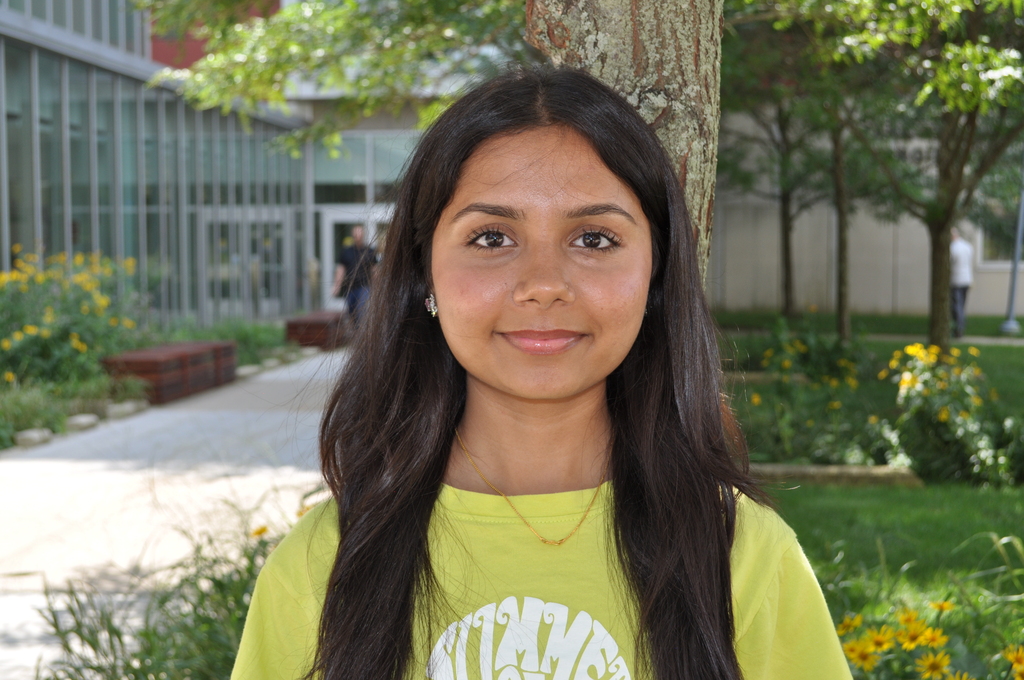
Vaishnavi Vyas
I am an incoming freshman at UML from Chelmsford, MA. I am pursuing Mechanical Engineering this coming fall. I like listening to music, going for nature walks, and hanging out with friends. During RAMP, I helped my team design the infographic and determine the best layout to convey its message. My favorite part of RAMP was meeting professors and industry professionals and making new friends.
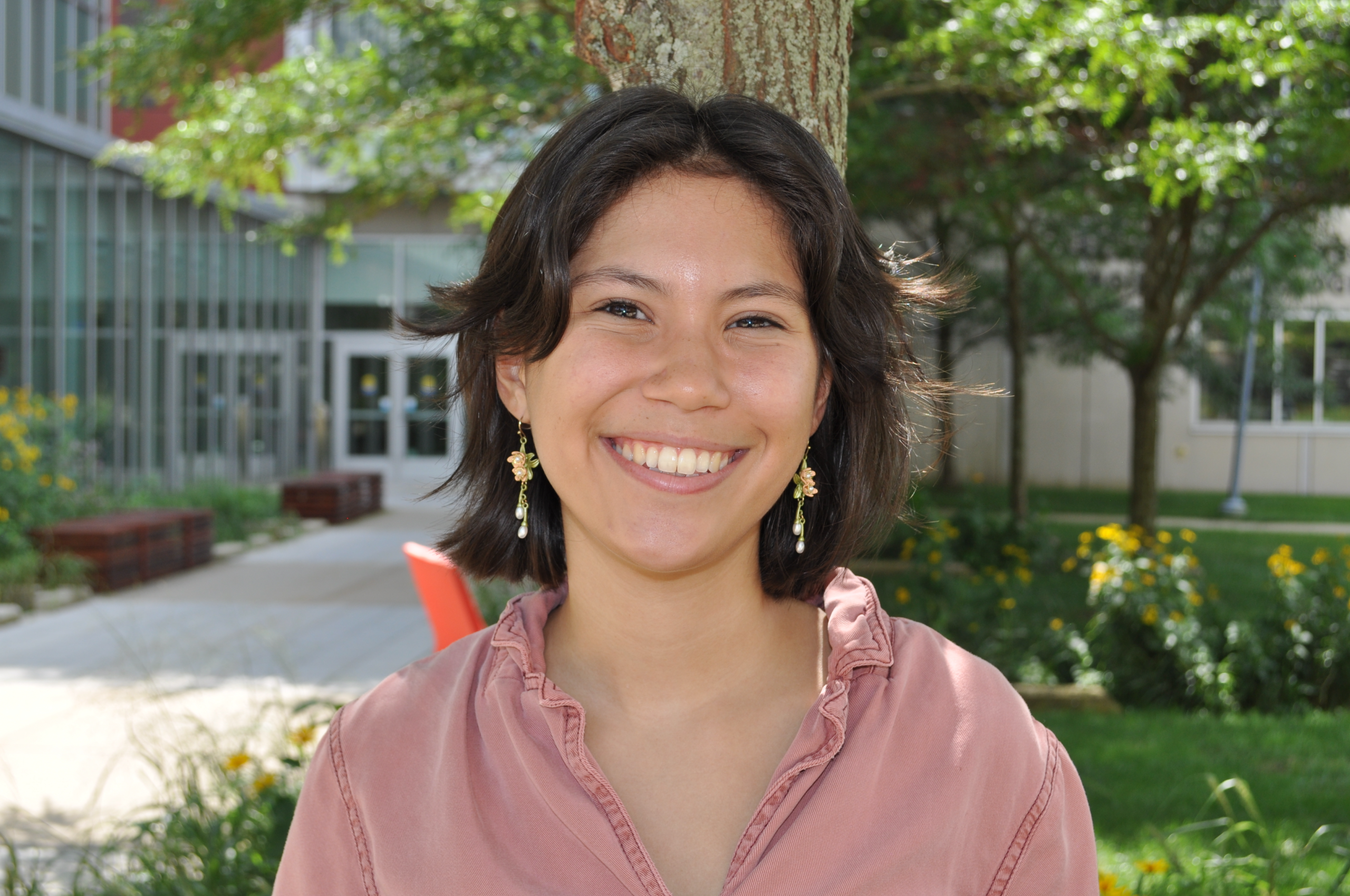
Adia Tang
Hi! I'm an incoming freshman at UMass Lowell majoring in Electrical Engineering. I'm from Salisbury, Massachusetts, and I enjoy spending time in nature. Some of my favorite hobbies are caring for plants, solving puzzles, and cross-stitching. During RAMP, I researched the Wolfspeed Gen 5 SiC MOSFET and its relationship to water consumption during the manufacturing process. My favorite part of RAMP was definitely making new friends and getting to know other students.
Looking Back
What We Learned
I’m surprised at how versatile electronics, such as the SiC MOSFET, vary from EVs to electrical grids. Choosing what sector of the usage to focus on was a major help in information, but also limited the scope of information, so some sources weren’t relevant. Visiting the electronics lab helped show what engineers did, such as material sciences.
Credit & Sources
Acknowledgements & References
Recognize the people who supported our work and document the sources we used to learn about our product, lifecycle stage, and engineering topic.
Acknowledgements
We would like to thank UMass Lowell’s RAMP Mentors and facility for helping us learn about semiconductors, and the materials we used in our project. We would also like to thank industry mentors from BAE Systems, and Analog Devices for their guidance on questions we have, and their expertise in a field that we have yet to enter yet.
References & Sources
- Lepawsky, Josh. “Climate Change Induced Water Stress and Future Semiconductor Supply Chain Risk.” ScienceDirect, 2024. sciencedirect.com
- Wolfspeed. “Wolfspeed Sustainability Report.” Wolfspeed, 2024. wolfspeed.com